Here is the writeup of my dash.
The first thing I had to decide was materials to use.
-Sheet steel
-Stainless
-Aluminum (brushed , treadplate etc)
-Polycarbonate (
Lexan)
-Acrylic (
Plexiglas)
I did not want to bother with any material that was heavy and difficult to cut. Steel is very heavy, pain to drill through, especially to make round holes for gauges. This would require an expensive set of hole saws --- my collection is pretty weak. I tried once to torch cut sheet and it was a nightmare. No access to bling cnc machines either. Stainless would be the same but with the added pricetag.
A metal dash I am guessing would do little to absorb/reflect sound and heat also.
My next option was aluminum which is a joy to work with for a hack like me but (I thought) would be too expensive. Onlinemetals.com.040-.050 sheet for reasonable prices (come to find out) so this may be a decent option.
That left me with plastics. Lexan/polycarbonate is about as expensive as aluminum and has the added bonus of a bullet proof variety but that seemed not worth the expense. So I decided to use acrylic sheet.
Acrylic is cheap and extremely easy to work with. It is light and can be bent and cut with easily available tools. My idea was to build a template and as my dashboard needs change I can at any time rip it out, trace it again and transfer stuff over to the new dash.
Below was my first mockup. I removed the stock dash trim piece ( a curved piece of stamped steel) and used it as the top brace for the plastic. The great thing about the acrylic is that I could bolt it down to the curved trim piece and it folowed the contour of the dash area with minimal effort.\
![[Linked Image]](http://www.pup4x4.com/projectpup/44/04.JPG)
The bottom edge of the dash is supported by a 3/4"x.125" bar of aluminum I bought at homedepot. It is drilled and bolted to the dash with #10-3/8" flathead pan head machine screws.
![[Linked Image]](http://www.pup4x4.com/projectpup/44/09.JPG)
Here is the supports I used some 1" wide strips of .075" steel sheet. Bent it in a vice and drilled holes in it. Used the same hardware to hold it. the dash is supported entirely across the top and bottom using this method but is still allowed to flex to make the curve.
The most important lesson in working with acrylic is below:
![[Linked Image]](http://www.pup4x4.com/projectpup/44/05.JPG)
You have to modify your bits for a much more acute cutting edge. Professional acrylic bits have a number of key features that make them different than steel bits, but you can make a decent plastic but with minimal effort on the grinding wheel. Even if you ground the bit to a point it will still work. A good bit will twist out the shavings and a bad bit will just burn through the plastic. Which is still OK. You just break off the "slag" with your fingers.
An unmodified steel bit will dig in too agressively and crack the plastic.
Another important note is you must use a larger bit to chamfer holes after drilling. This must be done on both sides to elimiate sharp edges that could concentrate stresses and crack the plastic.
For cutting, all the onlime manuals tell you to use a straightedge and a sharp blade, score the plastic and smash it quickly off a table to break along the score line. I tried this but it did not work so well. I would scratch the plastic and shoot off in tangents from the guide.
I used my trusty ryobi 4.5" angle grinder with cut off wheels!! What I did was prop up the underside of the sheet with a piece of angle iron parallel with the planned cut offset about an inch, then carefully ran the grinder down the mark. The wheel will slice right through the plastic but the "slag" will refill the void much like torch cutting. I would then just snap the pieces. Quick and dirty but it was easy.
Hole cutting was a breeze.
![[Linked Image]](http://www.pup4x4.com/projectpup/44/06.JPG)
Just support the whole sheet so it doesn't bend.
![[Linked Image]](http://www.pup4x4.com/projectpup/44/07.JPG)
To add to this low-budget dash, I cut out the warning light strip from my stock gauge cluster, again with the cut off wheel keeping just the little windows. I took the film with the icons on it and cut it with scissors and used superglue to keep the icons I wanted and remove those I did not.
My plan was to use the stock bulbs and solder some wire to them but their mounting orientaion made that difficult. So I took a piece of scrap aluminum and drilled holes in it for LEDs.
![[Linked Image]](http://www.pup4x4.com/projectpup/44/08.JPG)
One word of caution but if you buy generic LEDs many are not rated for 12V out of the box and you have to add an inline resistor. These for instance required a 680ohm 1/2W resistor, each. (no pic of that sorry).
I thought the clear plastic was kind of cheesy so I tried something different. You can of course paint the acrylic sheet but if you paint behind the sheet only it will create a cool effect. The plastic will then appear opaque in that color. I used some primer and "chalkboard" paint but any will probably work. No surface prep.
![[Linked Image]](http://www.pup4x4.com/projectpup/44/10.JPG)
The other cool thing about working with the acrylic you can see above is that you have the option of mouting stuff behind the sheet and masking out windows to protect the instruments and gauges. If you wanted you could mount your whole setup behind and mask the whole thing out.
For the masking I used blue painters tape and did a straight edge, then when the paint dired did another straight edge until I formed a box. But you could cut out pieces of paper to mask off boxes if you wanted. I actually mounted the gauge clusters first, then masked off the area I wanted on the front of the dash, removed the gauges and flipped the piece over to work on the back.
Installed. Does not photograph well because the flash bounces off the surface.
![[Linked Image]](http://www.pup4x4.com/projectpup/44/11.JPG)
back side:
![[Linked Image]](http://www.pup4x4.com/projectpup/44/12.JPG)
I saved connectors from my stock wiring harness and used one for the switch panel and one for the gauges. This way the whole dash is easily removeable. Just make sure the connectors are up to the load if you are using them to carry any high current circuits. The other hole is for my matching digital tach. I also recommend putting down some mdf or similar as a work surface so you don't scratch the panel while you work on it.
Switch panel
![[Linked Image]](http://www.pup4x4.com/projectpup/44/13.JPG)
headlights, wipers, washer, and fan auto/off switch.
The leds come on with the illumination circuit and the 0-50K ohm pot makes it so they don't blind you. You could wire in permanent resistors if you wanted to dim the LEDs also. These are just to find the switches at night they do not indicate anything.
This panel is .040 aluminum that came with a radioshack project box. I think mounting the switches directly in the dash is a bad idea from the stress of flipping them might crack the acrylic. In this case I can remove the panel easily and add another switch.
[img]
http://www.pup4x4.com/projectpup/44/14.JPG[/img]
Everything is wired to work correctly except the oil light. The oil pressure gauge has its own warning light for <18psi but it's not a real attention getter, I might add a seperate low oil pressure sender later to use the bright warning light.


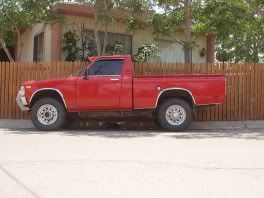


![[Linked Image]](http://www.pup4x4.com/projectpup/46/01.JPG)
![[Linked Image]](http://www.pup4x4.com/projectpup/46/02.JPG)
![[Linked Image]](http://www.pup4x4.com/projectpup/46/03.JPG)
![[Linked Image]](http://www.pup4x4.com/projectpup/46/04.JPG)
![[Linked Image]](http://www.pup4x4.com/projectpup/46/05.JPG)
![[Linked Image]](http://www.pup4x4.com/projectpup/46/06.JPG)
![[Linked Image]](http://www.pup4x4.com/projectpup/46/07.JPG)
![[Linked Image]](http://www.pup4x4.com/projectpup/46/08.JPG)
![[Linked Image]](http://www.pup4x4.com/projectpup/46/09.JPG)
![[Linked Image]](http://www.pup4x4.com/projectpup/46/10.JPG)
