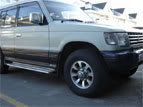
Hi, I'm new to this board. So far I'm super impressed with the info that you guys have. I'm new to Pajero world, but have owned a few Mitsu's over the years so I'm use to having to give a little extra love.
Now I'm the proud owner of Betsy IV, Phil's old JDM shorty.
This is my first diesel vehicle so I was a little concerned about the injectors. I've heard horror stories about bad injectors washing cylinder walls. I started searching the board about injector information but didn't find much so I decided to experiment.
I started by phoning and injector company in town that specializes in diesel injectors. I asked about using an injector cleaner or if I should go to the expense of getting them cleaned. The shop did not have much experience with Pajeros but they had a fair amount of experience with other JDM diesels.
They advised me that many JDM trucks need their injectors re-built. The guy figured it had to do with how much low the millage was on allot of JDM vehicles and that the trucks never get a good long highway burn to keep them from carbonning up. It was recommended that I get the injectors cleaned and tested. The shop was willing to remove them themselves or I could bring in them in myself.
I decided to remove the injectors myself to have them cleaned and tested.
This is the procedure I followed... keep in mind I learned all of my mechanical skills on a farm so by no means am I a professional. Secondly, I did this a few weeks ago so I may forget a few minor steps, but if I can figure it out anybody can do it.
A few tips about doing this. CLEAN EVERYTHING! I took the truck to a car wash and cleaned the engine bay before starting. I forgot to factor in that the injectors sit in a depression in the head. That space was full of mud and dirt that was baked on. As soon as I unhooked the fuel lines the diesel broke down this mud which then worked it's way onto the sealing surface when I removed the injectors. I wasted an hour cleaning this area when I went to re-install everything. I'd recommend doing a detailed clean around the injectors prior to removal, maybe use compressed air to blow any dirt out. If the truck has ever been wheeled (mine had) I would expect there to be allot of dirt in these areas, even if you keep the engine bay clean.
The tools you need for this procedure are the basic Mitsu sized, 10mm-17mm sockets and wrenches. The one unique piece that you will need is a 22mm deep socket. This is used to remove the Injector itself. I also ended up needing a dental pick to pull out the washers that sit between the head and the injectors.
The initial procedure is simply unhooking the inter cooler and moving it too the side. Allot of people bungy them to the hood when changing the fuel filter. For this procedure I'd recommend getting it right out of the way. First off, you end up working on the top of the engine allot and it gets in the way, secondly, you will have the injectors out of the truck while they get tested and you'll probably want to close the hood.
You will then have to unhook a few sensors and whatnot to make room to work. The key move for me was undoing the bolt that holds the dip stick in place. This is the only way you will have room to work on the third injector.
Next up, unhook the injector lines. Be careful with this as the fittings are brass. It wouldn't hurt to hit these with some penetrating fluid the night before to loosen these up. My truck is JDM so there were no corrosion issues. I also undid some of the brackets that hold the lines together. This lets you flex the lines out of the way (being very very carefull not to kink the line). You don't have to move the line far. Just an inch or two.
Next up you will see what I can only describe as a "fuel rail". In order to remove this line there are a bunch of brackets in the way and a line running to the rail. I was working outside and didn't feel like removing these so I simply lifted it off of the injectors and moved it out of the way an inch or two. This is actually when I learned the trick about unbolting the dipstick.
Next up, pull out the injectors with the deep socket. I'd recommend numbering them, it may be a way to track running issues you've had with the truck (if one is burnt worse than the others etc).
The injectors are two parts. I wouldn't recommend separating them; in fact don't separate them! There are springs and shims in there you don't want to lose. I unfortunately didn't have a deep socket so I decided to take the injector apart. I got luck and didn't lose any parts... If I'd have known I was going to need a 22mm deep socket I would have bought it. I ended up needing it for the re-install. Learn from my mistakes and just go buy the socket.
There are brass washers that sit between the injector and the head. You will need to pull these out too. Two of mine were easy. The other two gave me problems. Be very careful with this process. If you damage the head in any way it may not seal properly when you re-assemble. This means living with a truck that runs crappy or buying a new head. I wasn't unable to get one washer out and decided to leave it in. So far I've had no issues, but who knows? I could have a minor compression leak develop on that cylinder very easily, it may be leaking now. I check around the injector for any signs of a leak regularly just to make sure. This is the only regret I have about my injector project. I wish i spend more time trying to take that washer out.
You may be tempted to change the fuel filter at this point... which on paper sounds like a good idea and is exactly what I did. After all, the inter cooler is out of the way, right? Doing the filter at the same time created issues when I re-assembled everything and had air in the system. I'd recommend doing the filter first, running the truck then doing the injectors. This reduces the number of places in your fuel system where you may have airlock. I'd do the filter first so you don't run crappy fuel through your nice clean injectors.
Once everything was apart and the injectors where out I plugged up any holes, locked up the truck and opened a Miller (you may choose a beer of your liking).
I took the injectors in to the shop to get cleaned and tested. They phoned me later that day with bad news. The injectors were functioning but there was a fair amount of carbon build up on all of the injectors and two of the injectors weren't closing or opening well, even after cleaning. I had a choice of taking them as is, or getting them re-built. Since I'm a lazy guy and don't feel like going through this next year I had them re-built. The cleaning was going to cost me about $250 Canadian ($50.69 US). With parts and labor the re-build was just over $500 they didn't charge for the already completed test and clean (cool shop eh?).
I took the injectors in on Friday and had them back, cleaned and ready to rock Monday night.
I couldn't find any information on re-install but I didn't look too hard. I have read mixed reviews on if anti-seize should be used with re-install. I had no problems taking the injectors out, and there were no corrosion issues, but I also feared damaging my precious aluminum head. I decided to use a Liberal amount of nickle anti-seize on the threads of the injectors.
Re-install is a reverse of removing the injectors. The re-built injectors should come with new washers (hence why we took the old ones out). If you didn't need your injectors re-built I would still get new washers to ensure that you don't loose compression. In go the injectors, yada yada yada you're done... while almost.
Because I had everything apart (fuel wise) there was tons of air in the system. Priming the pump from the fuel filter housing helped but it didn't want to start. I ended up loosening the fitting at the injectors then turning over the engine. This allowed the trapped air to escape and the truck started up. This isn't the cleanest procedure, but it worked. I then simply tightened up the fittings and was done. The truck won't run smooth the fittings are loose, but it will run. It's actually kinda cool because if you tighten them while it's running the you can feel it smooth out (small things amuse small minds). Keep in mind, that fuel will be squirting out of the fittings so you should wear eye protection and do this in a ventilated area.
Sine I've done my injector re-build there has been a noticeable improvement in throttle response. The real improvement is in cold starts. The truck is much happier starting when the temperatures are around or below freezing. In theory my millage should be better but it is hard to judge with winter diesel not to mention the truck has to be warmed up prior to driving (which really takes millage out of the questions). I'll know better come summer.
I hope this helps other Pajero owners since it seems to be the first post on the board about injectors (that I could find anyway). Sorry my first post was so long.
Cheers
Maurie
'91 JDM Mitsubishi Pajero SWB
4D56
32" BFG AT KOs (winter)
33" BFG MTs (summer)
Snorkel
Otherwise Stock (but so much fun!)
A.K.A Betsy IV
'07 Nissan Frontier
32" Toyo Open Country ATs
Boring and stock
A.K.A. Cliff